The Venice Canals: How LA Paved Over Its Own Venice, Italy
The wild story of how Abbot Kinney built 16 miles of canals in 1905, how cars killed most of them, and what the six surviving canals mean for buyers today.

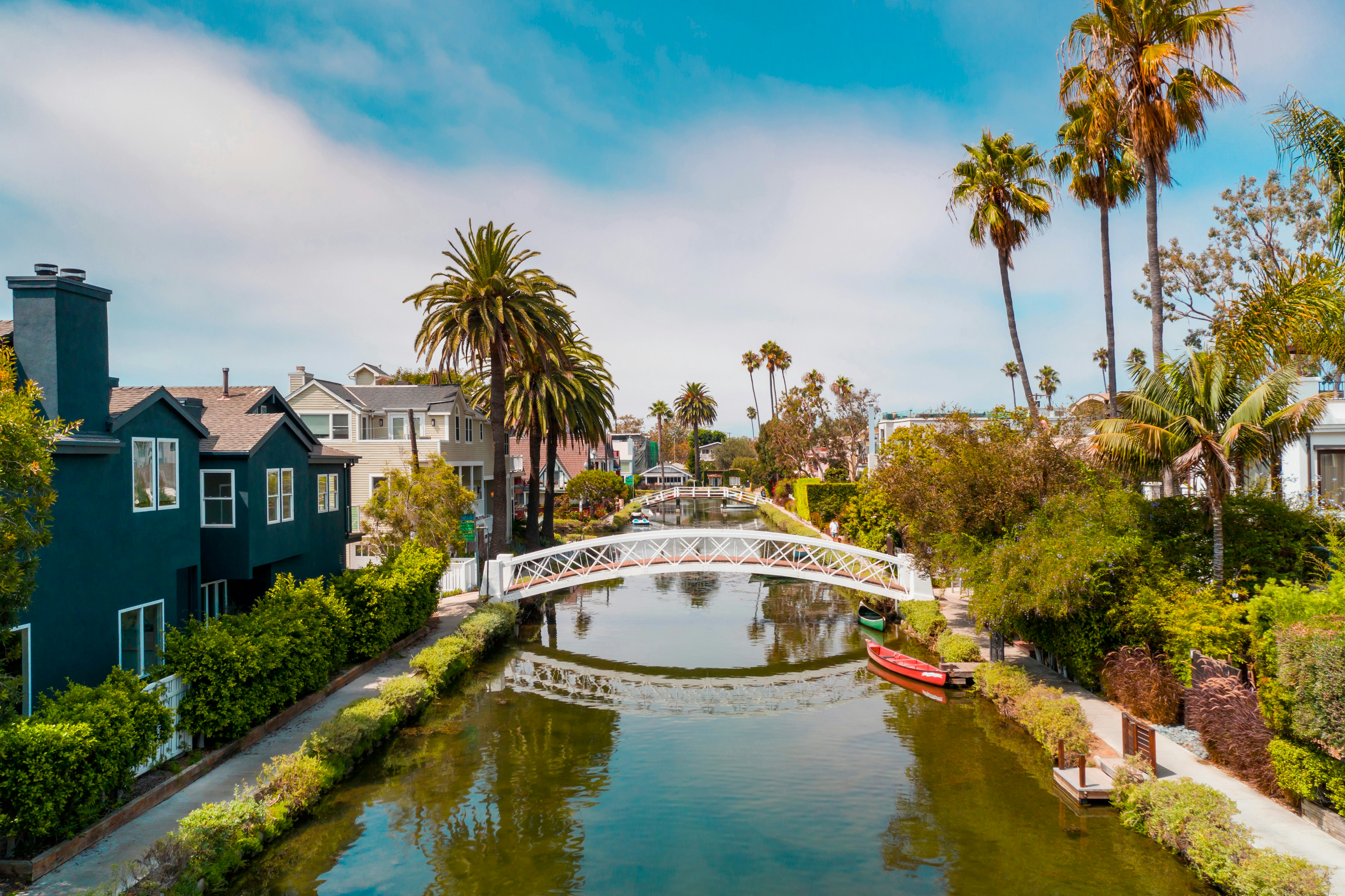
In 1905, tobacco millionaire Abbot Kinney looked at a decaying coastal swamp near Los Angeles and saw Venice. Not just any Venice — he saw the Venice of Italy. Canals, gondolas, Italian architecture, European elegance. He thought: Why shouldn't Los Angeles have this?
What followed was one of California's most audacious and ultimately tragic real estate developments. Kinney spent $3.5 million (equivalent to roughly $100 million today) to construct a literal replica of Venice across 160 acres of salt marshes. He built 16 miles of canals. He imported oil derricks from Signal Hill and repurposed them as "European towers." He brought in gondoliers from Venice, Italy, and paid them to pole boats through the canals while wearing period costumes.
For about 20 years, it worked. Venice became a genuine destination. Tourists came. Rich people built mansions. The Pike Amusement Park opened in 1905 with roller coasters and attractions. At its peak, Venice was California's premier beach town — a place where you could actually walk on the beach without getting covered in oil, unlike Long Beach.
Then the cars came.
Homes For Sale in Venice
View allLive from MLS · Updated every 3 hours
The Roads Changed Everything (1925-1929)
By the mid-1920s, Los Angeles was transforming into an automobile city. The answer to every urban problem was suddenly "build a car road." Parking was becoming a crisis. Pedestrians were dying in accidents. Venice, with its winding canals and charming pedestrian-focused design, was seen not as a romantic destination but as an inconvenient obstacle to development.
The city of Los Angeles (Venice was annexed in 1926) decided that maximizing car traffic was more important than preserving Venice's canals. In 1929, they ordered the paving over of 10 miles of canals. Culverts were built. The water that once flowed through those canals was redirected underground. The romantic gondola rides stopped. The gondoliers went home. The amusement park closed in 1931 when the Great Depression hit.
Only six canals survived. The water in those six was diverted to storm drains. The remaining canals became stagnant, full of algae and debris. For decades, they were seen as eyesores rather than assets.
The Six Canals That Survived (And the Housing Market That Followed)
The surviving canals are Dell, Carroll, Linnie, Howland, Sherman, and Eastern. They sit one block from the Venice Boardwalk chaos, yet somehow exist in a completely different world. The streets are tree-lined and quiet. No cars are allowed on the canal-facing sides. Ducks and geese live in the water. On a Tuesday morning, you can stand on Carroll Canal Bridge and hear nothing but birds.
For most of the 20th century, the canals were considered the worst part of Venice to live in. The water quality was poor. The properties were cheaper. In 1990, you could buy a 1,000 sqft bungalow on the canals for around $200K. Today, the same bungalow sells for $1.8M to $2.2M depending on which canal and which side of the street.
The renaissance began in the late 1990s when a few things happened simultaneously: (1) Young tech professionals started moving to Venice, (2) The boardwalk became increasingly expensive and crowded, (3) The water quality in the canals improved due to upgraded stormwater management, and (4) Buyers realized that $1.5M could buy you a quiet, tree-lined neighborhood that felt like a completely different world, even though you were literally 2 blocks from the crazy boardwalk.
Today, Venice Canals is one of LA's most exclusive neighborhoods. The smallest lots start at $1.5M. If you want a renovated 3-bedroom on the water, you're looking at $2.5M to $3M+. The median price per square foot is actually higher than the rest of Venice because of the premium paid for waterfront quiet.
What This Means If You're Thinking About Buying in Venice
The canals exist in a totally different market from the rest of Venice. Same zip code, completely different buyer profile. If you're looking at Venice Boardwalk properties, you're getting the energy, the foot traffic, the tourists, the restaurants, the surf. Median prices: $1.8M-$2.0M.
If you're looking at the Venice Canals, you're getting peace, quiet, water views, and the kind of property that traditionally appreciates better during corrections because the neighborhood is stable and exclusive. Median prices: $2.1M-$2.3M.
Both are worth their prices. They're just completely different purchases. And knowing the history helps you understand why.
Homes For Sale in Venice
View allLive from MLS · Updated every 3 hours

$859,000
4050 Glencoe Ave
1 bd · 2 ba

$1,400,000
310 Mildred Ave
3 bd · 3 ba

$1,395,000
1938 Walgrove Ave
2 bd · 1 ba

$4,250,000
633 Santa Clara Ave
3 bd · 2 ba

$998,000
235 Main St
2 bd · 2 ba

$1,695,000
128 Park Pl
2 bd · 1 ba

$1,895,000
610 Harbor St
2 bd · 3 ba

$2,250,000
805 Crestmoore Pl
4 bd · 3 ba
Recently Sold in Venice
What homes have actually sold for - Source: CLAW MLS

$985,000
4350 Via Dolce
2 bd · 2 ba

$3,500,000
249 Rennie Ave
4 bd · 4 ba
$1,850,000
558 San Juan Ave
4 bd · 3 ba
$770,000
4314 Marina City Dr
2 bd · 2 ba
$2,895,000
513 Grand Blvd
4 bd · 4 ba

$1,390,000
13337 Beach Ave
3 bd · 3 ba

$1,715,000
935 Indiana Ave
3 bd · 2 ba
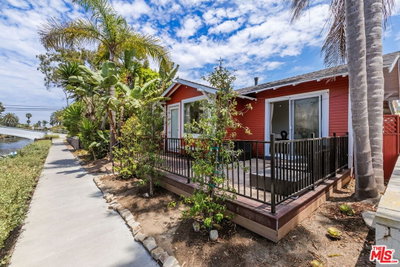
$2,005,000
232 Howland Canal
3 bd · 2 ba
Frequently Asked Questions
What makes Venice Canals homes different from other Venice properties?
The six surviving canals sit one block from the boardwalk in near-total quiet. No through-traffic on canal-facing streets. Ducks on the water, bridges every 50 feet, and neighbors who actually know each other. It is the same zip code as the boardwalk and a completely different world.
How much more do Venice Canals homes cost compared to regular Venice homes?
Expect to pay a 15 to 25 percent premium over comparable non-canal Venice homes. A renovated 3-bedroom on the water runs $2.5M to $3M-plus. Smaller bungalows start around $1.8M. The price per square foot is consistently higher than the Venice average because of the quiet premium buyers pay to be two blocks from the boardwalk without hearing any of it.
Is parking difficult on the Venice Canals?
Yes, and it is the honest trade-off. The canal-facing sides of canal streets are pedestrian only, no cars. Most homes have a garage off the alley on the back side. Street parking for guests is limited and competitive, particularly on weekends. Factor this in if you have more than one car or host regularly.
Do Venice Canals properties have HOAs or special maintenance fees?
No HOA. The canals themselves are maintained by the City of Los Angeles. Property owners on the canal side share responsibility for the walkways and bridges abutting their lots. Budget for regular exterior maintenance on any structure near the water, which accelerates weathering. Confirm exact city maintenance boundaries in the purchase disclosure.
Which canals are most desirable to live on?
Carroll Canal and Eastern Canal are generally considered most sought after. Carroll is the widest and has the most established trees and landscaping. Eastern gets more afternoon light. Dell and Linnie are popular with families for slightly quieter foot traffic. Sherman and Howland are solid but rank below the others in most buyers' priorities.
Do the Venice Canals flood or have water quality issues?
Flooding is rare but not unknown during significant rain events. The canals are connected to the storm drain system, which in heavy years can push water levels up. Water quality improved significantly after a city renovation project in the 1990s. The canals are not swimming water, but they are clean enough for the wildlife that lives on them year-round.
How far is the Venice Canals neighborhood from Abbot Kinney and the beach?
About a 5 to 10 minute walk to both. Beach access at Washington Boulevard is roughly 4 blocks west. Abbot Kinney is 3 to 6 blocks east depending on which canal you are on. The walkability is exceptional for Los Angeles and is a major part of what buyers pay the premium for.

Tony O'Brien
REALTOR, The Sher Group · DRE #02200838
Tony built the LOCALLA website to give buyers and sellers a more transparent way to search and transact on the Westside. He specializes in Venice, Santa Monica, Pacific Palisades, and the broader LA Westside market.
MLS data sourced from CLAW via LOCALLA. The Sher Group DRE #02022464.
Listing data provided by the Combined L.A./Westside MLS (CLAW). All data is deemed reliable but is not guaranteed and should be independently verified. Tony O'Brien DRE #02200838. The Sher Group DRE #02022464.